Stay in the Game
Your athlete has a competition date and an injury. The coach wants them training. You're the one who has to say what they can still do.
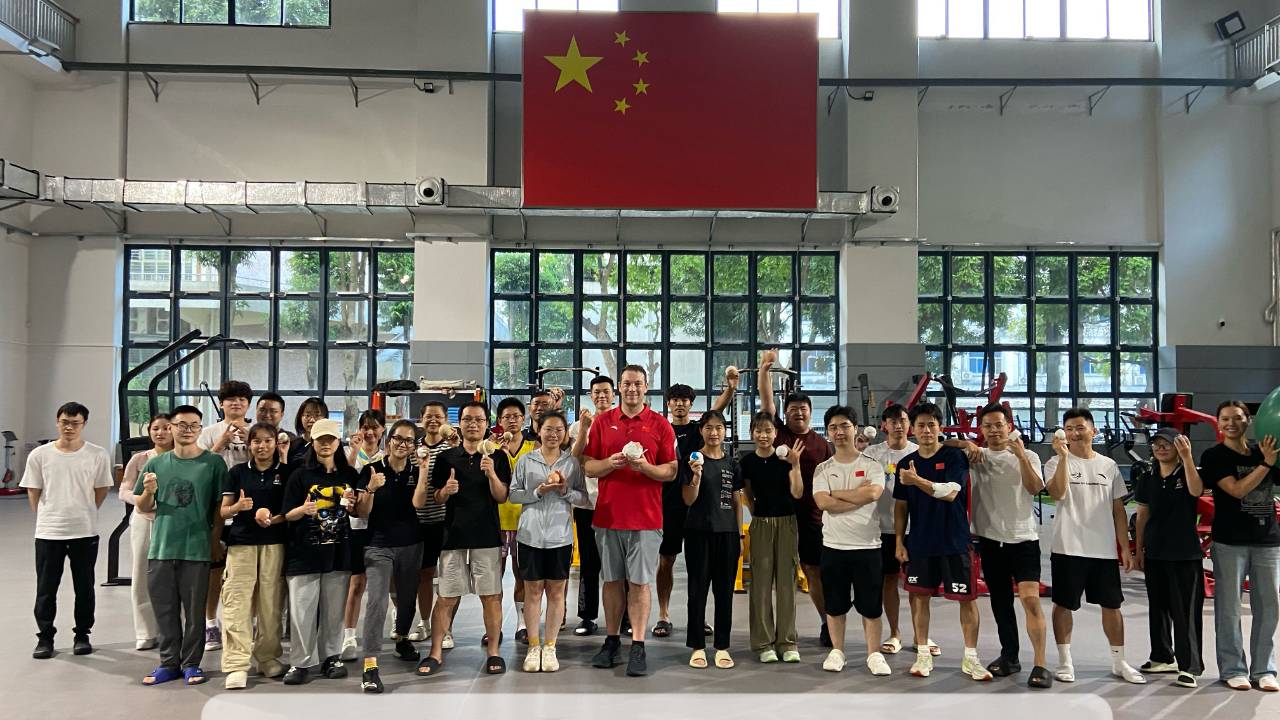
Four days on how to answer that. It was recorded with the rehab and performance staff preparing athletes for China's National Games.
Get the workshop — $299Li Yanrong
She hurt her shoulder in the first half of a match and her elbow in the second half, and finished the match anyway. Both of them then showed up in her training.
She's a wrestler on our program, the National Games were close, and she needed to be competing at full level rather than being managed around. Her coach's position was that she keeps training, so we worked with him directly.
Her conditioning, strength and power all kept climbing through it. What changed was the selection. We picked work that still drove strength, power and endurance without loading the shoulder and elbow the way that set them off, so the injured tissue got enough stimulus to improve and not enough volume to degrade further. Then we rebuilt the tissue itself.
She went to the National Games and competed at the highest level in China.
The modification and the rebuild are the two halves of this workshop.
Modifying the training
The usual approach is to find what hurts and take it out. The athlete gets more comfortable and stops improving, and by the time they're cleared they've lost months they now have to make up.
This is the half that kept Li Yanrong's numbers climbing. Changing load, range, volume and speed so the athlete keeps getting stronger while the injury settles, and how to tell whether a modification is working or whether you've just made the session easier.
Finding the limiter
What hurts and what's limiting performance are often two different things. This half is about working out which is which, building a plan for it, and having a way to check week to week whether it's moving. It's the rebuild we ran on her shoulder and elbow.
The tissue force ladder is covered here in full, every rung, with demonstrations. So is fast force expression.
Where this came from
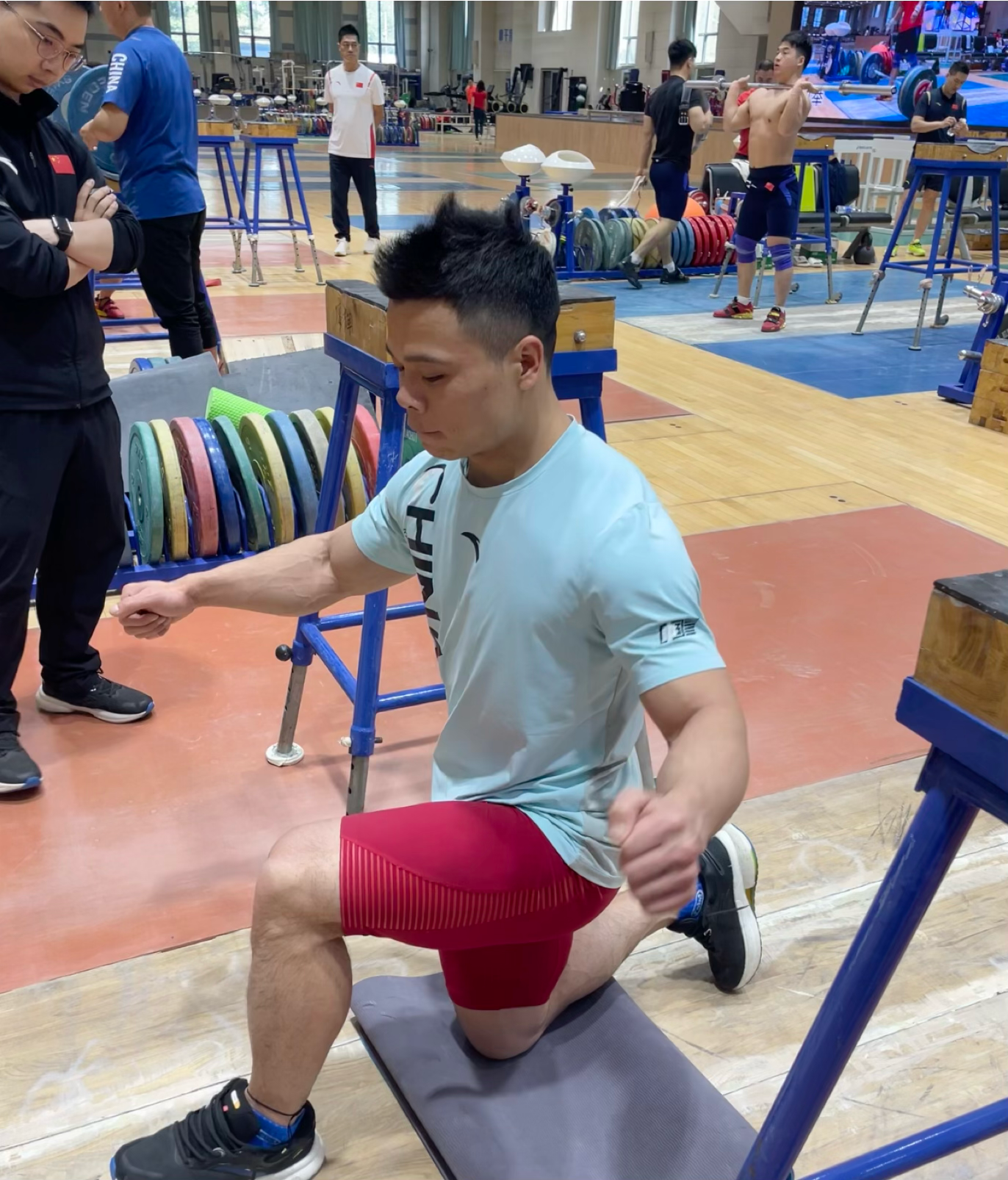
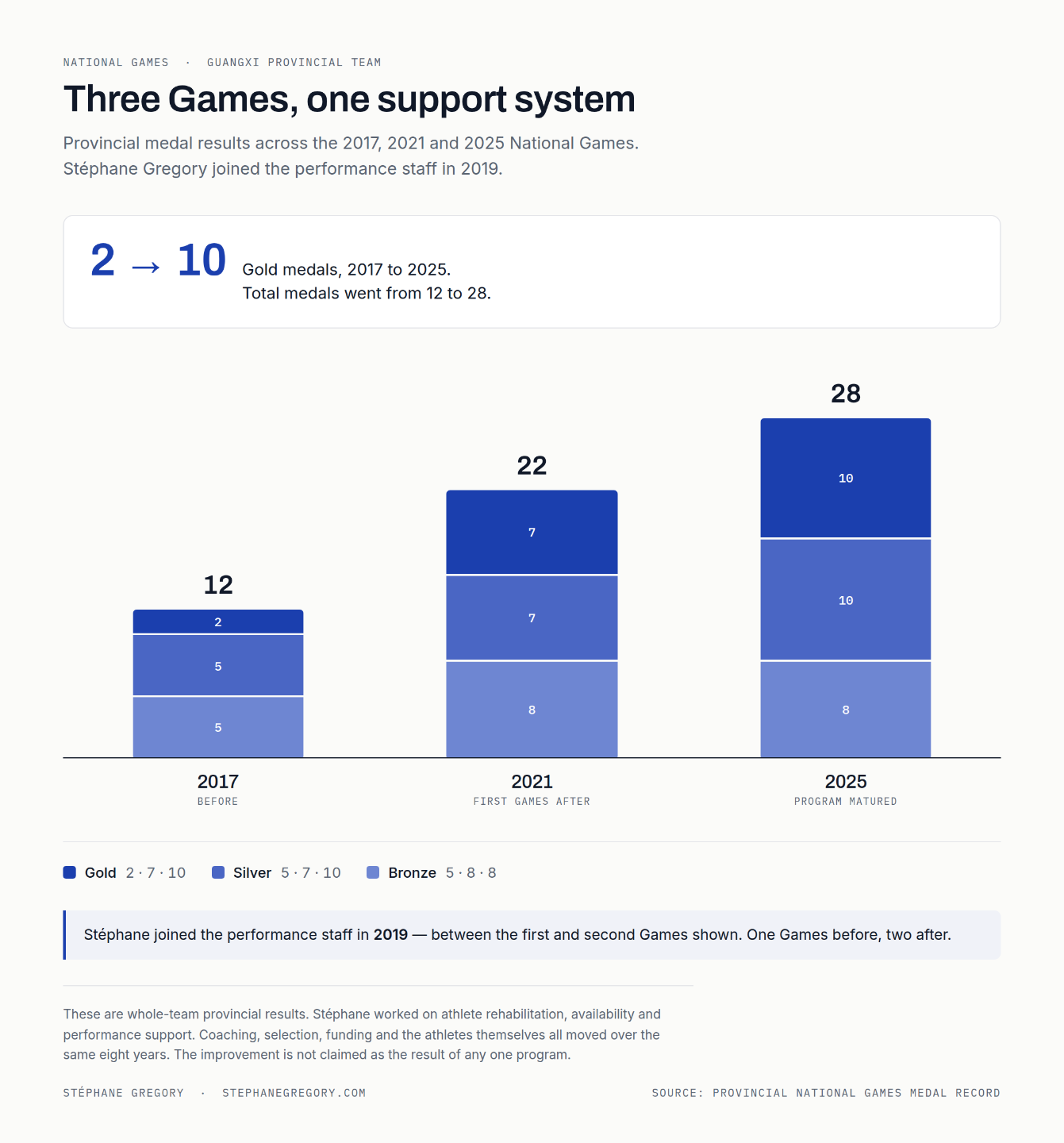
I spent eight years with Team China, as Director of Performance for Guangxi Province. This is what I taught the rehab and performance staff there while we prepared athletes for the National Games, which is China's biggest domestic competition and where a province's four-year cycle gets judged.
It was put together for a staff who had athletes to get to a start line and needed to be running the same system between them.
What the recording is like
One camera, a live room, and the original Mandarin taken out. The camera doesn't always find me, the lighting is whatever the room had, and there are no motion graphics. It's not a produced course and I'm not going to pretend otherwise.
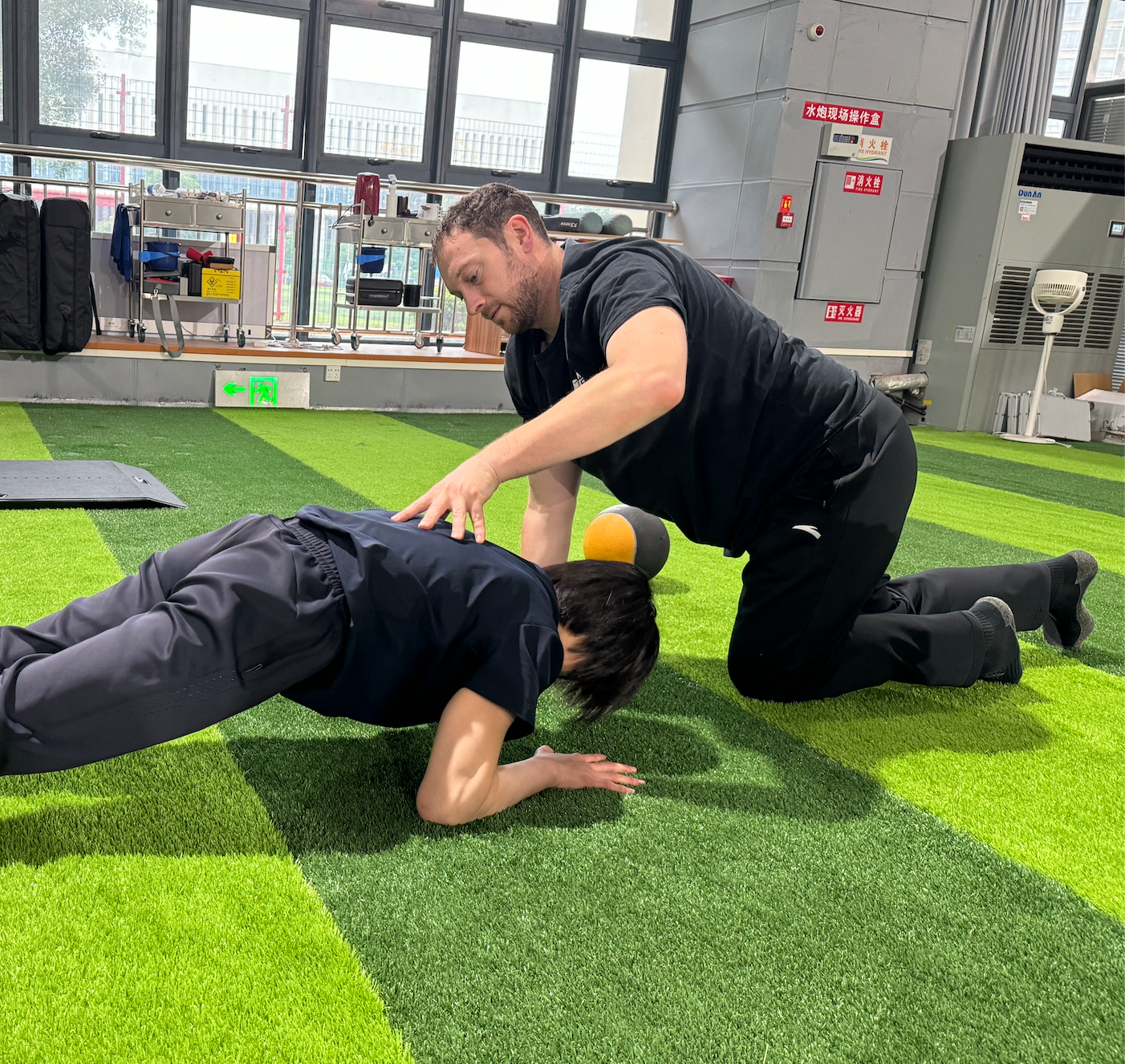
What you get is the whole system taught the way I teach it, with full exercise demonstrations for every progression. Therapist and trainer material sit in the same recording, because both were in the room.
Who it's for
Therapists and coaches who carry responsibility for whether an athlete gets back. Physios, chiros, manual therapists, strength coaches. It assumes you can already treat and you can already train. What it adds is what to do when both have to happen at once and there's a date.
If you're after a technique to add to a toolbox this will frustrate you. It's a system, and most of what it's worth is in running all of it rather than picking pieces.